
Basal Implants vs Conventional Dental Implants: Which Tooth Replacement Option May Be Right for Your Smile?
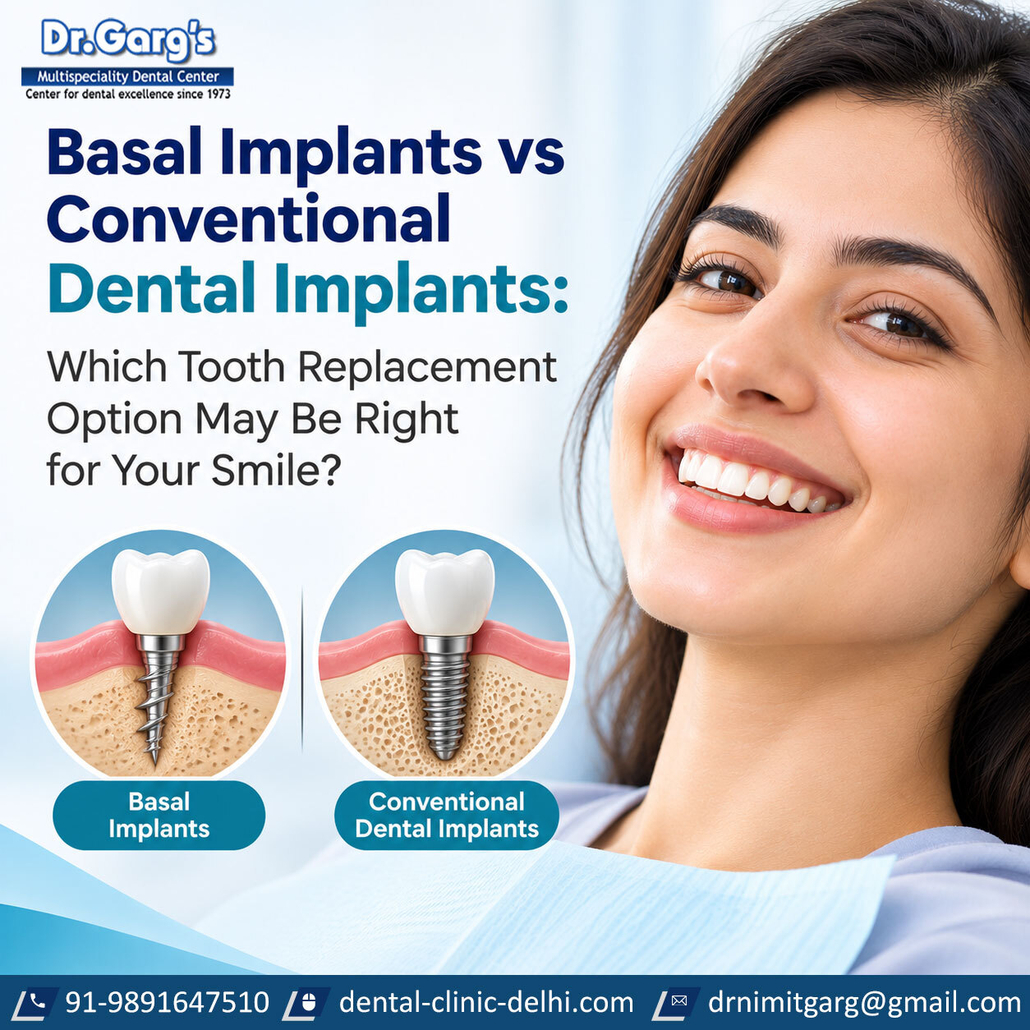
Missing teeth can affect much more than appearance. They may make chewing difficult, influence speech, and reduce confidence when smiling. Dental implants offer a way to replace missing teeth, but not every implant technique is the same. Two options patients may come across are basal implants and conventional dental implants.
Understanding the differences between these approaches can help patients have a more informed discussion with their dentist before choosing a treatment.
Understanding Basal Dental Implants
Basal implants are designed to use the basal or cortical bone, which is the denser part of the jawbone. This approach may be considered for certain patients with reduced bone volume, depending on their clinical condition and the dentist’s assessment.
One reason patients explore basal implants is that some treatment plans may allow implant placement without the same bone-grafting procedures required in certain conventional implant cases. However, suitability depends on individual anatomy and treatment requirements. A detailed examination is essential before making any decision.
What Are Conventional Dental Implants?
Conventional dental implants are commonly used to replace missing teeth. They are generally placed in the jawbone, where they integrate with the surrounding bone over a healing period. Once the implant has healed sufficiently, a crown, bridge, or other restoration can be attached.
Conventional dental implants are widely used for replacing individual teeth or supporting larger restorations. In patients with insufficient bone, additional procedures such as bone grafting may sometimes be recommended.
Basal Implants vs Conventional Implants: Key Differences
When considering basal implants vs conventional implants, patients should look beyond treatment duration or cost alone.
Some important factors include:
- Bone requirements: Basal implants use denser cortical bone, while conventional implants are generally placed within the jawbone and rely on suitable bone support.
- Treatment planning: The procedures, placement techniques, and healing requirements can differ.
- Bone grafting: Certain basal implant cases may avoid grafting, whereas some conventional implant cases may require it.
- Individual suitability: Jawbone condition, gum health, medical history, and the number of missing teeth influence the treatment recommendation.
The choice between a basal implant vs conventional implant should always be based on a professional examination rather than general claims about one method being better.
Why a Dental Consultation Matters
At Dr. Garg’s Multispeciality Dental Center in Rajouri Garden, West Delhi, patients can discuss tooth replacement options and understand which approach may suit their oral health needs. The center has been providing dental care since 1973.
A dentist may evaluate jawbone condition, take appropriate dental imaging, and review the patient’s medical and dental history before recommending an implant procedure.
Make an Informed Choice for Your Dental Health
Both basal and conventional implants have specific applications. The right option depends on the patient’s condition, treatment goals, and professional assessment. Understanding the differences and discussing realistic expectations with an experienced dental team can help patients take a confident step towards restoring their smile.